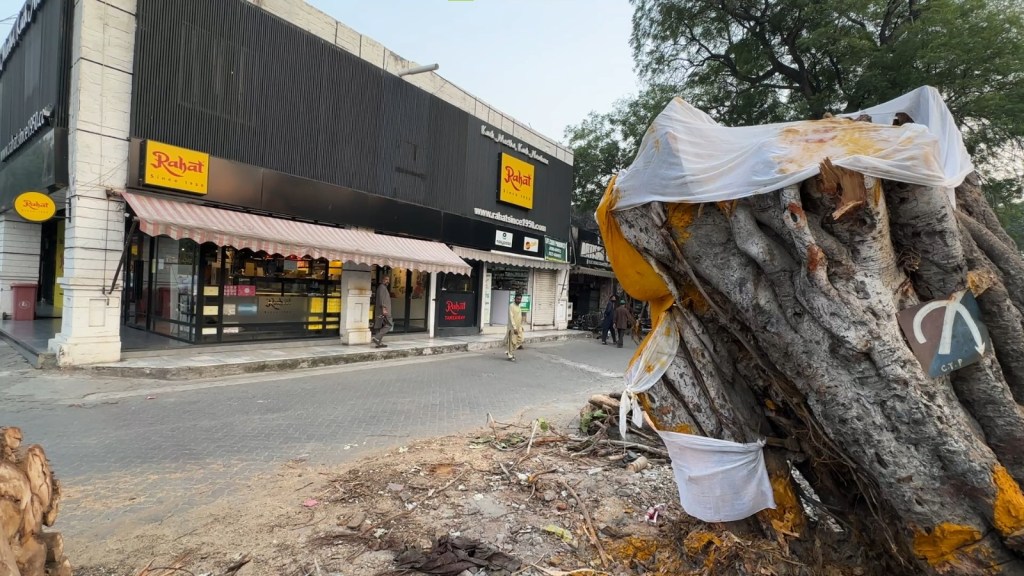
In October last year, a 150-year-old banyan tree in Lahore Cantt was chopped down, a living witness to our childhoods. It survived decades of change, chaos, and smog…but it couldn’t survive indifference. More than a tree was lost that morning, and with it went a piece of the city’s memory, its shade, and the life it nurtured.
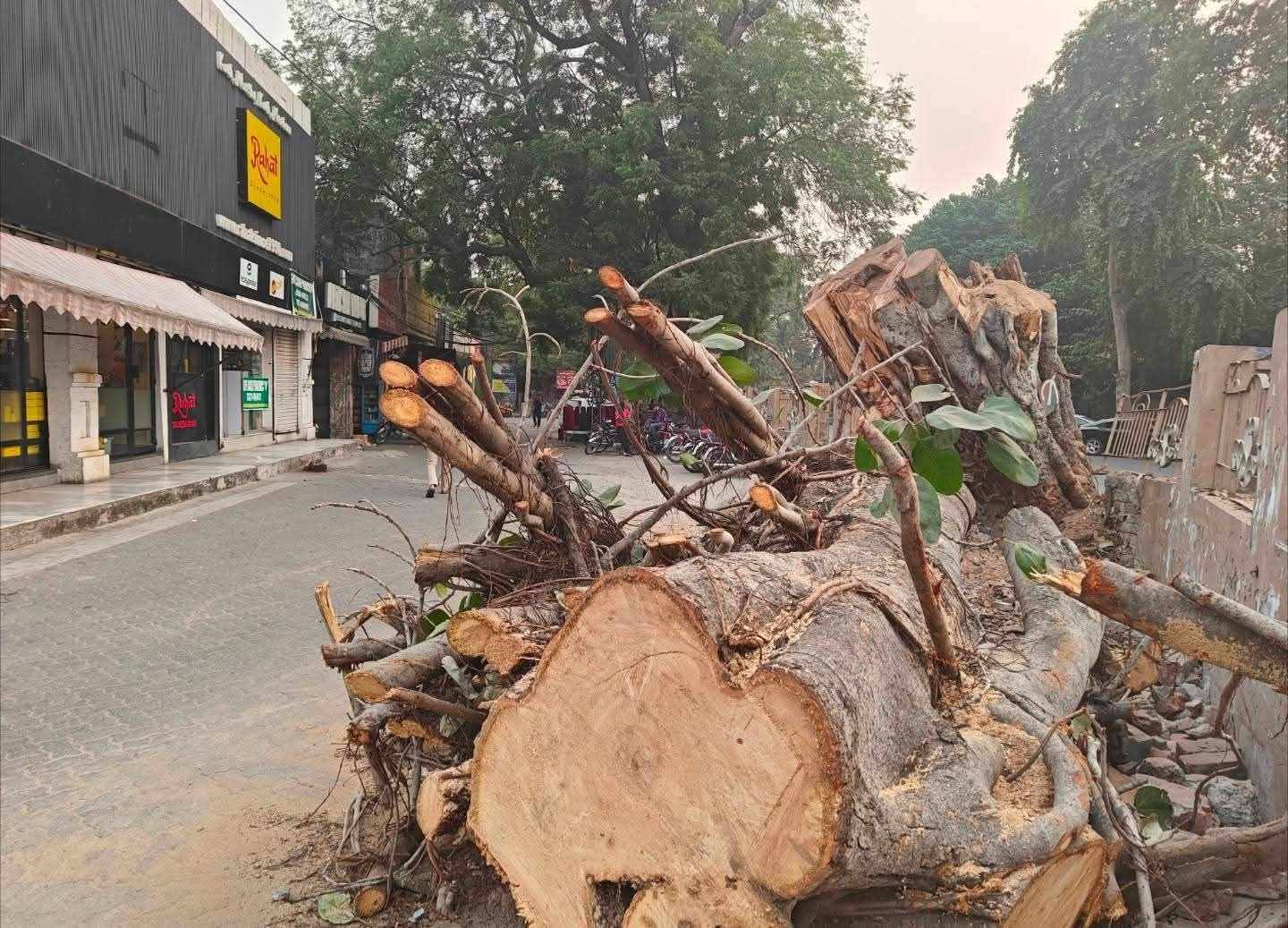
The beautiful tree had stood at a busy roundabout for decades, a giant among smaller trees, quietly hosting birds, insects, and even the occasional neighborhood cat. Locals remember it as a meeting point, a place to sip tea, or simply pause from the rush of the city. Its canopy offered comfort from the scorching sun and a moment of calm amidst the chaos of traffic and markets.
Despite surviving years of urban expansion, smog, and construction, the tree could not survive human indifference. One morning in October, workers cut down its vast branches, leaving only a stump behind. Activists rushed in, wrapping the remaining trunk in cloth and applied turmeric to the stump, a traditional measure meant to protect it from decay and give the tree a chance to regrow
Within hours, the felling sparked immediate outrage. Initial reports suggested that the action was linked to complaints about parking and shop visibility at Rahat Bakery. Some activists claimed that the bakery had requested the tree be removed, though no formal permission was shown. In response to public backlash, Rahat Bakery issued a notice on social media clarifying that they had not asked for the tree to be cut down, emphasizing that the decision was made by the Cantonment Board. Even with the clarification, the incident raised questions about oversight, responsibility, and the protection of Lahore’s natural heritage.
Activists also pointed out that the land where the tree stood did not belong to the bakery, making the removal even more controversial and highlighting how easily the city’s green spaces can be lost when accountability is unclear.
For environmentalists, the tree’s value went far beyond nostalgia. Mature banyans provide essential ecological benefits: they filter air pollution, cool surrounding areas, and serve as habitats for countless birds and insects. Losing such a tree isn’t just a visual loss, it’s a huge blow to the city’s ecosystem and resilience against the toxic smog season which continues to roll out, year after year, morphing the city into a gas chamber.
Residents spoke of their personal connection to the tree. Some recalled entire decades spent sitting under its branches, watching children grow, or finding quiet relief from the heat. Its absence has left a tangible void in the neighborhood, both in shade and in memory. The incident is a stark reminder that Lahore is growing fast, and not always with care. When a single tree that has witnessed generations is treated as an obstacle, it asks a deeper question: what do we value in our city?
Heritage isn’t just monuments and old buildings…it lives in the trees, streets, and quiet spaces we often take for granted.

 FLWL - From Lahore With Love
Leave a comment