
This week, Hazem Asif takes us on a deeply personal journey from a 90s childhood filled with cartoons and coloured pencils to becoming an internationally published illustrator. In this piece, he writes about nostalgia, setbacks, reinvention, and what it truly means to become the hero of your own story…
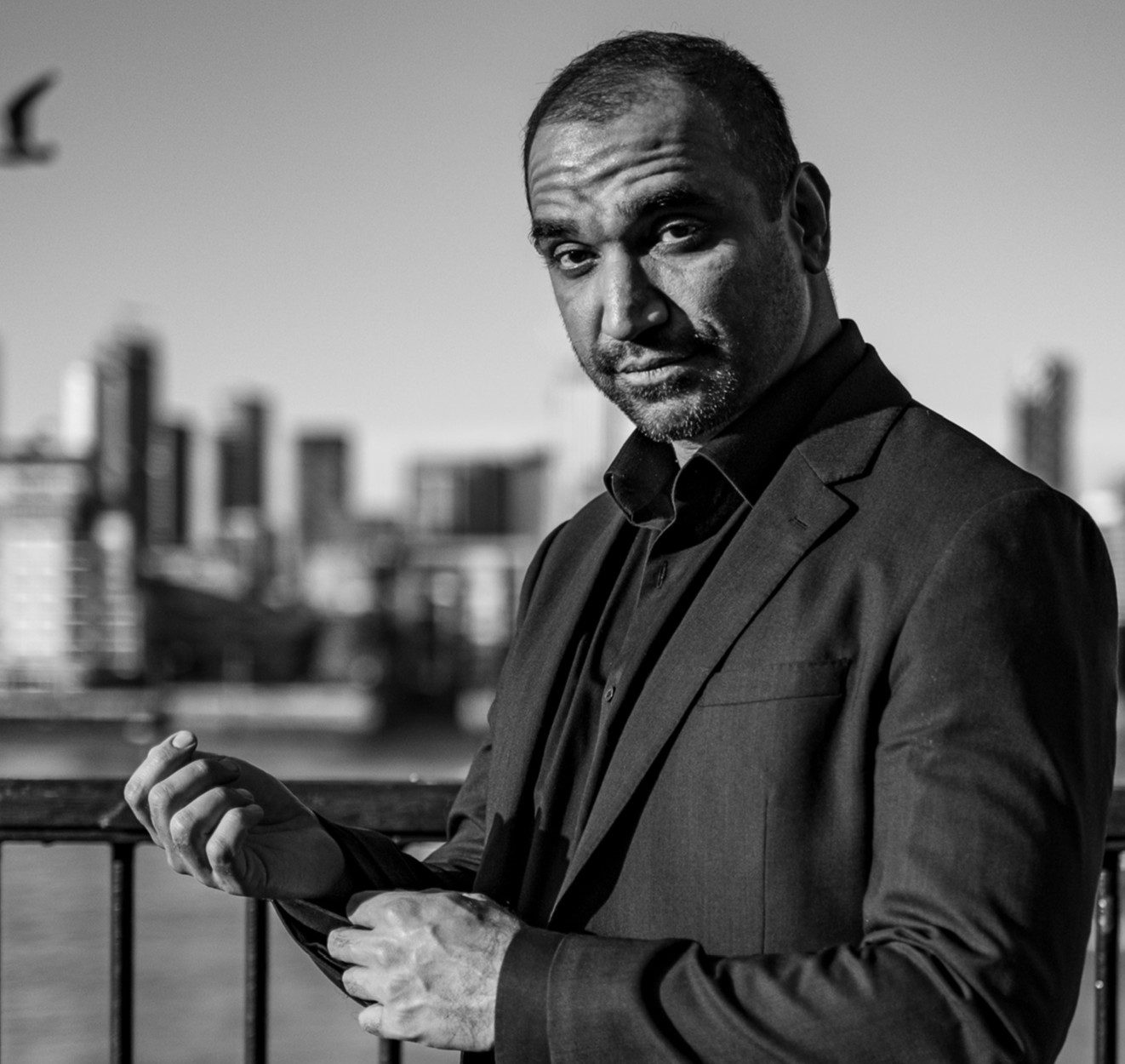
By Hazem Asif
Like many millennials, I grew up as a 90s kid in a pre-internet age when simple moments felt magical: cycling for hours around the neighbourhood, ringing doorbells and running away, watching shows such as Uncle Sargam, Sesame Street, The Powerpuff Girls, Samurai Jack, and Pokemon, and losing myself in fantasy and mystery fiction by Roald Dahl, Enid Blyton, and R. L. Stine. These small rituals taught me how to build stories in my head, notice imaginary worlds, fall in love with characters, and pay attention to literature, music, and artistic expression. I think that’s where my love for visual storytelling began. That’s where the dream of being a hero in my own story was born.
Back then, the world felt quiet and wholesome, and time did not chase you. With all these magical inspirations around me, a quiet, deep desire to become an artist took root and grew into a passion.
The nostalgia and echoes of childhood soon vanished in the early 2000s. The outside world felt fragile, ready to break at any moment. Bomb threats became part of everyday life. Schools erected high walls topped with barbed wire. Fear was present everywhere we looked. As a teenager, I found solace in my coloured pencils, acrylic paints, and books, spending hours mimicking characters and fantastical worlds, trying my best to perfect my art. While others played football during school breaks, I was often found in the school library. Imagination was how I escaped.

One fine summer in 2006, I had a chance encounter with the first American editions of the Harry Potter book series, and my life changed for good. Mary GrandPré’s mesmerising cover art, featuring Harry on his broomstick, along with the glossy title and chapter illustrations, proved that art could speak to your soul. From that moment on, illustration wasn’t just something I loved; it became my ultimate obsession and a pathway I couldn’t stop thinking about.
Despite the conventional thinking our society holds about being an artist, my family fully supported my decision to pursue fine arts. They requested that my school enroll me in special O-Level Fine Arts classes, since none were offered at the male campus. Their support was everything. It gave me the opportunity to take my artistic path seriously.
After graduating from high school, I wanted to enroll at the National College of Fine Arts, the most celebrated art college in Pakistan, but life had chosen a different path for me. I ended up applying to Virginia Commonwealth University School of the Arts in Doha, Qatar, where I received a scholarship. It was the first time I would be living alone. Moving abroad was one of the most fulfilling and transformative experiences of my artistic career and personal growth. I was no longer the shy kid in class, but someone deeply observant and passionate about changing the world.

In 2016, I graduated with a BFA in Graphic Design with Honors, and in 2018, I completed an MFA in Design. Driven by a passion for socially conscious design, I wanted to use visual storytelling to explore ideas that matter. Both of my graduate thesis projects reflected socially conscious themes rooted in the society we lived in.
After graduation, I spent a year and a half hunting for jobs in Qatar and the Middle East, but nationality barriers meant each search led to a dead end. In 2019, I finally decided to return to Pakistan, a challenging decision because it meant leaving behind my creative playground and my network of lifelong friends and colleagues in Doha.

After returning to Lahore, I had to find my path again. After seven years away, I experienced reverse culture shock, and it took time to understand the local creative market. I began reaching out to universities and advertising agencies and started participating in local exhibitions and online competitions. However, because the niche was already filled by other talented local artists and designers, breaking in without local references or a network was difficult. I was often approached for projects, but many local clients expected the work to be done for free. The exploitation I faced in the market was disheartening and made me question my decision to become a graphic designer. That’s when I decided to take matters into my own hands.
To rediscover myself, I started creating illustrations from scratch, beginning with illustrated film and television fan art and concept pieces. As I worked on refining my style, I was drawn to speculative and socially conscious design that reflects the world we live in. I aimed to create illustrations that could act as a catalyst for social change, inviting viewers to imagine how the world could be better. I explored visual narratives that encouraged people to pause, feel, and reflect. This vision became the guiding light of my artistic mission and allowed me to explore both local and global themes in my work.

I began building a series called Truckistan, a non-linear illustration series that visually speculates about the future of Pakistan, intertwined with science fiction phenomena, ecological disasters, and political corruption in the near future. The first and most popular piece in the series was CyberLahore, which was displayed at the renowned Maison&Objet exhibition in Paris in 2020. At the same time, I started working full-time as a Science Illustrator at the Lahore University of Management Sciences, a role that helped shape my growing passion for science.
Sharing my work online was terrifying, but I took a leap of faith and started posting anyway. Slowly, my work found its audience and gained wider recognition. Freelance projects soon followed. Having an online presence helped, and in 2021, I was approached by The Lancet HIV to illustrate their journals for a year, an experience that kickstarted my career in publishing. Although I had no prior scientific background in HIV, I took it on as a challenge to translate complex ideas into accessible illustrations for the general public.

Over the next six years, I went on to collaborate with global organizations such as Google, creating a Google Doodle for Moin Akhtar, as well as working with Al Jazeera Media, Hyundai, and the Doha Film Institute. I am currently represented by Plum Agency in the UK and have published around 20 illustrated books with international publishing houses such as HarperCollins, Bloomsbury, and Puffin Books.
Many of my illustrated books became the centerpiece of shop window displays across the UK, including Nura and the Immortal Palace, which went on to win the Waterstones Best Children’s Book in 2023, and The Night I Borrowed Time, which was selected as Waterstones Children’s Book of the Month in January 2026. My upcoming illustrated picture-book retelling of The Odyssey is already receiving rave reviews online and is scheduled for publication in May this year.

With a full-time job, it is often difficult to juggle freelancing on the side. There are inevitable stages of exhaustion, burnout, and feeling stuck in a cyclical hamster wheel. I have often wondered whether I should drop one role to focus on the other. But what keeps me moving forward is the realization that only a few years ago, I was dreaming of the life I am living now.
In starting over and developing my own artistic style, I’ve learned that the process is the most crucial part of any journey. For new artists and designers, accepting that you will always face a changing world – shifting markets, new tools like artificial intelligence, client rejections, and even exploitation – is part of the path.
That is how you become the hero of your own story…by never giving up, adapting to change, and eventually finding your ground and your peace.

Leave a Reply